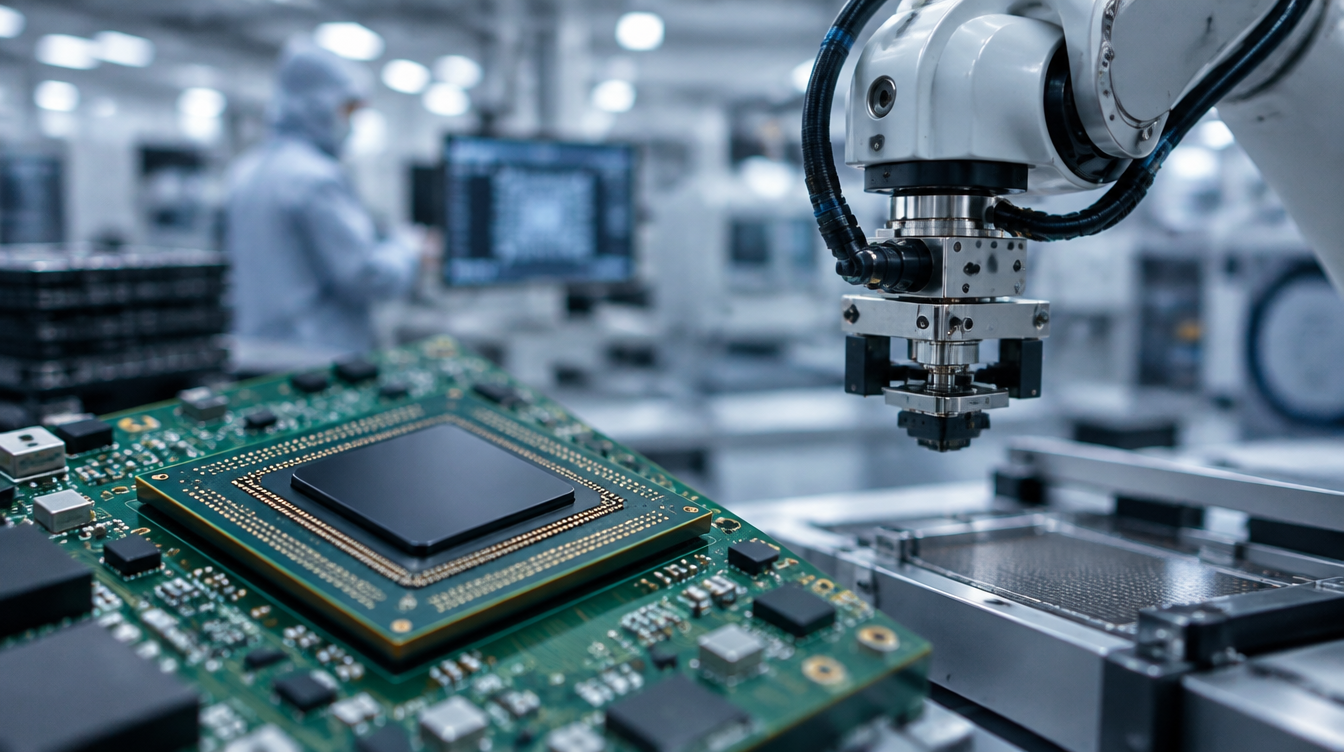
BEIJING — D-Robotics, the robot-computing chip company spun out of Horizon Robotics in 2024, has closed a $400 million Series C — about 2.68 billion yuan — announced on 17 September. The company named only “a leading global internet company” as the lead, alongside institutional investors and existing shareholders. It is the third round D-Robotics has raised this year, after Series B1 and B2, taking its 2026 total to roughly 4.5 billion yuan.
By the numbers
Cumulative shipments of the Sunrise chip series passed 8 million units by mid-2026. The flagship part is the Sunrise S600, launched in November 2025 and quoted at 4,800 TOPS with 1/2 sparsity — a figure worth reading carefully, since sparsity-adjusted throughput is not the same as dense compute, and D-Robotics has not published a dense number. The company says the S600 picked up more than 20 customers in its first six months and that first-half revenue grew several-fold year over year.
The named customer list is a fair map of China’s embodied-AI sector: UBTECH, Fourier, Astribot, X Square Robot, Spirit AI, Booster Robotics, PaXini Tech and TARS. Around that sits a developer ecosystem the company puts at more than 500 robotics companies, 500 universities and 100,000 developers in over 20 countries. D-Robotics claims coverage of more than half the Chinese embodied-intelligence market — a self-reported share with no independent audit behind it.
The money is earmarked for widening the Sunrise line across compute tiers and for the software stack that sits on top of it — the “brain for every robot” pitch that every silicon vendor in this category now makes, Nvidia included.
Why it matters
The July decision by the U.S. Federal Communications Commission to add foreign-made mobile communicating robots over 2 kg to its Covered List bars imports of finished Chinese machines, not the chips inside them. But the practical effect is the same direction of travel: a Chinese robot-silicon supplier scaling on domestic demand, with a customer base that is almost entirely domestic, while U.S. builders consolidate around Nvidia and Qualcomm. Two stacks, diverging — and $400 million buys a lot of divergence.
Leave a Reply