Category: Events & Policy

Competitions, conferences, regulation, and government moves shaping robotics.

  • FAA Doubles BEYOND Drone Program as BVLOS Rule Stalls

    FAA Doubles BEYOND Drone Program as BVLOS Rule Stalls

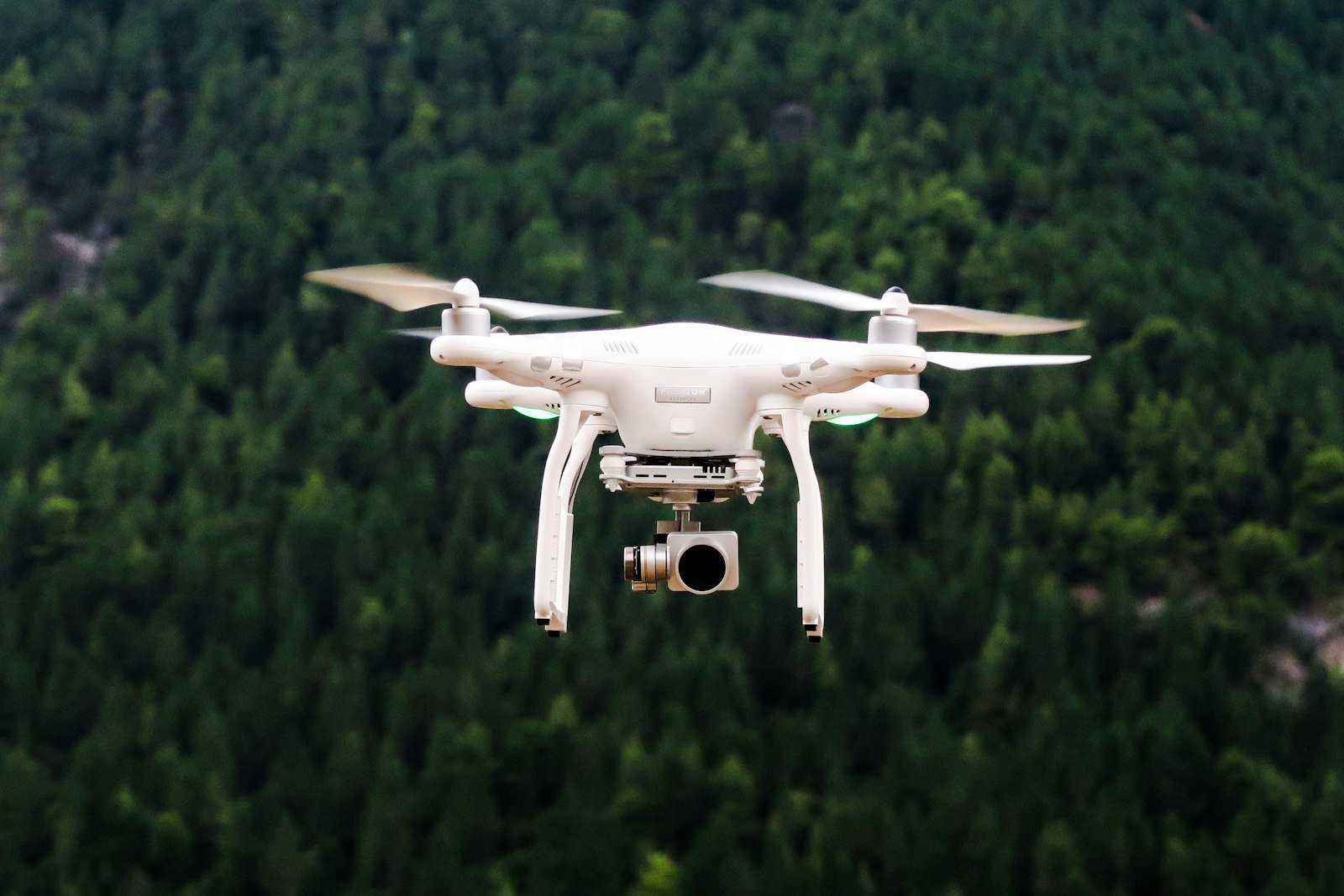
    WASHINGTON — The FAA has announced Phase 2 of its BEYOND program, adding up to eight new lead participants to test larger cargo drones, longer routes and flights above 400 feet. The expansion doubles the program from 8 to as many as 16 participants.

    What Phase 1 produced

    Launched in October 2020, Phase 1 logged 70,563 flights, 48,383 of them beyond visual line of sight (BVLOS). That data was supposed to feed directly into Part 108, the long-awaited rule that would let commercial operators fly BVLOS routinely without a waiver.

    The rule that isn’t

    Part 108 remains unfinished. The FAA missed its June 2026 deadline, leaving delivery, inspection and agricultural drone operators dependent on visual observers or one-off waivers. Administrator Bryan Bedford said Phase 2 “will expand the partnerships and operations needed to address remaining challenges” — which the industry read as: more testing, no date.

    For marine and waterfront operators — dock inspections, marina surveys, coastal monitoring — routine BVLOS is the single regulatory change that would turn drones from a hobbyist tool into infrastructure. We’re still waiting.
    Sources

  • Beijing’s Robot Olympics Triples in Size With 2,056 Humanoids

    Beijing’s Robot Olympics Triples in Size With 2,056 Humanoids

    BEIJING — The second World Humanoid Robot Games wrapped up this week at the National Speed Skating Oval — the “Ice Ribbon” built for the 2022 Winter Olympics — and the numbers tell the story of how fast this field is moving. Organizers reported 666 teams from 16 countries fielding 2,056 humanoid robots across 51 events, up from roughly 280 teams and 500 robots at the inaugural games in August 2025. That’s a 138% jump in participation in a single year.

    Less spectacle, more work

    The 100m dash, football and boxing bouts that went viral last year were all back. But the bigger change was the addition of 21 scenario-based events designed to test skills companies will actually pay for: industrial assembly, hotel service, emergency rescue and warehouse logistics. Thirty events remained pure competition; in total the games ran 1,301 individual matches.

    Of the 666 teams, 641 were Chinese and 25 came from overseas — a reminder that while the event bills itself as a world championship, it is first and foremost a showcase for China’s domestic humanoid industry, which now counts Unitree, UBTech, AgiBot and dozens of smaller players.

    Open benchmarks to follow

    Organizers say full performance datasets from the games will be released as open benchmarks, which would give researchers outside China a rare, standardized look at how these machines perform under identical conditions.

    One claim we’re not repeating: a secondary site reported a sub-Bolt 9.32-second 100m. We couldn’t corroborate it with a primary source, so treat it as unconfirmed.

    Sources

  • World Robot Conference Opens in Beijing With 150 Product Debuts

    World Robot Conference Opens in Beijing With 150 Product Debuts

    BEIJING — The 2026 World Robot Conference opened this week at the Beiren Etrong International Exhibition and Convention Center in Beijing E-Town, running August 19–23 under the theme “Human-Robot Symbiosis, Production-Demand Convergence.” If the Humanoid Games down the road are the sport, this is the trade show — and it has become the single best annual snapshot of where China’s robotics industry actually is.

    By the numbers

    • 300+ exhibitors and more than 2,000 exhibits on the floor
    • 150+ products making their first public appearance
    • 60+ forum sessions — double last year’s program
    • International guests making up roughly 30% of attendees
    • A parallel competition strand with 10,000+ competitors from 6,000+ teams across 20+ countries

    What was on the floor

    Headline demos included brain-controlled humanoids and quadrupeds, a “Robot Shopping Street” staffed by robot chefs and baristas, and a long tail of practical machines — surgical robots, sewing robots, and parcel-sorting systems — that get less attention than the humanoids but are far closer to paying for themselves.

    The takeaway for anyone outside China: the gap between “demo” and “product” is closing fastest in the unglamorous categories. Watch the sewing and sorting robots, not just the ones that can backflip.

    Sources

  • FCC Bans Imports of Foreign Humanoid and Mobile Robots

    FCC Bans Imports of Foreign Humanoid and Mobile Robots

    WASHINGTON — The Federal Communications Commission has added foreign-produced “mobile communicating robots” weighing more than 2 kilograms — humanoids, quadrupeds and other autonomous mobile systems — to its Covered List, along with power inverters. The effect is a ban on new imports of those devices into the United States on national-security grounds.

    What the rule actually says

    • Applies to robots over 2 kg with communications capability above 200 kbps
    • Drones, vehicles and medical devices are excluded
    • Devices already in the country and federal government purchases are exempt
    • Conditional approvals can be sought through the Department of War or DHS; applications are due by January 1, 2028

    Country-neutral on paper, not in practice

    The rule doesn’t name a country. Everyone understands it is aimed at China’s Unitree, whose quadrupeds and humanoids are widely used in US universities and research labs. But because the language is country-neutral, it also sweeps in allied manufacturers — IEEE Spectrum and The Robot Report both flag Switzerland’s ANYbotics, whose inspection quadrupeds are used by US industrial customers, as collateral damage.

    Industry reaction has split predictably: US humanoid startups see a protected home market; researchers see the cheapest capable research platforms disappearing from their catalogs.

    Sources