Category: Drones & Marine

Robots that operate where people cannot easily go, or should not have to. This category covers uncrewed aerial systems and the marine side that most robotics coverage skips entirely: uncrewed surface vessels, subsea inspection and hull-maintenance robots, autonomous survey craft, and the yard and port automation that supports them. The technical problems are largely solved — builders have been putting capable uncrewed vessels in the water for a decade — so the binding constraints are regulatory and operational. Who is the legal master of a ship with nobody aboard? Who signs off on a beyond-visual-line-of-sight flight? What happens at the four different degrees of autonomy the industry actually recognises? We report the hardware, but we spend as much time on the rules, the insurance and the crewing questions that decide whether any of it leaves the dock.

  • Australia Arms Ghost Shark With Up to 12 Sea Mines and Altius Drone Swarms Under A$5.8 Billion Undersea Plan

    Australia Arms Ghost Shark With Up to 12 Sea Mines and Altius Drone Swarms Under A$5.8 Billion Undersea Plan

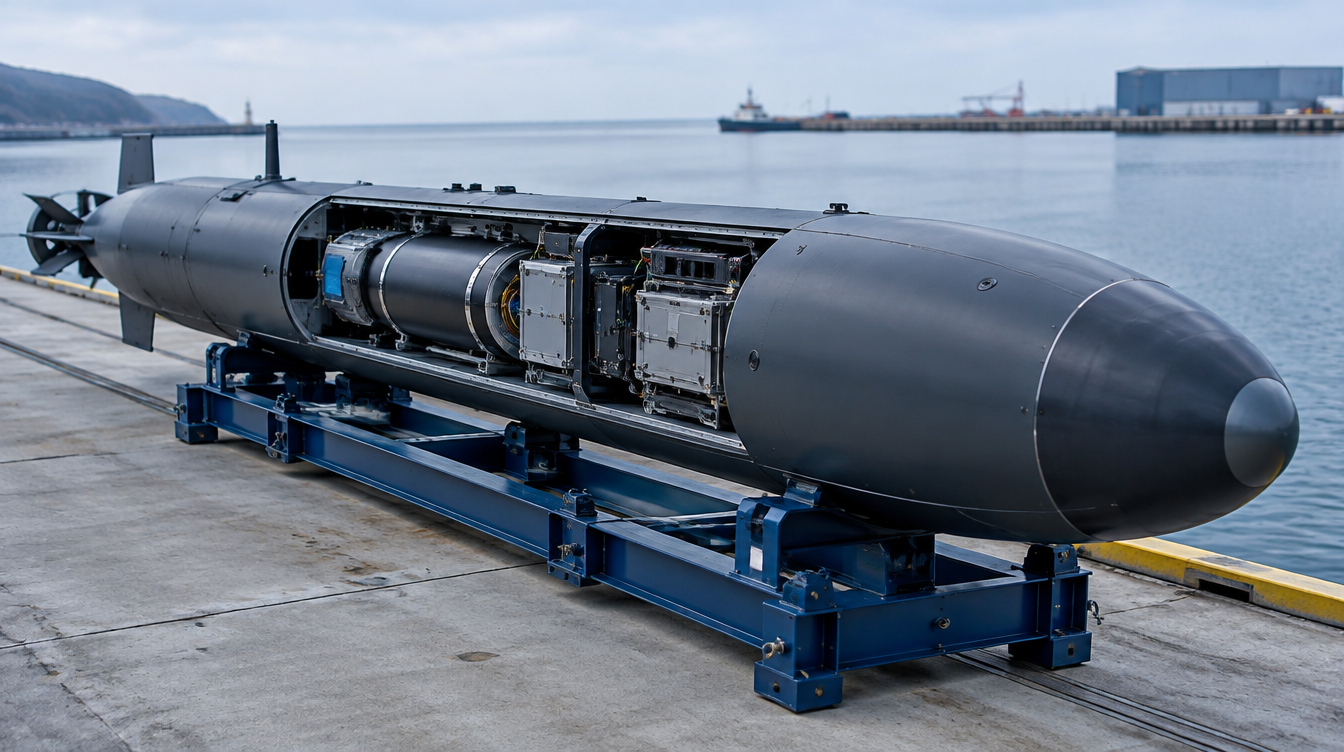
    SYDNEY — The Australian government disclosed on 19 October the first specific weapons and payloads for the Ghost Shark extra-large uncrewed undersea vehicle, saying the Anduril-built boat can carry up to 12 sea mines at a time, release swarms of tube-launched Altius loitering munitions, and deliver seabed logistics caches developed by Defence’s Science and Technology Group. Defence Industry Minister Pat Conroy made the announcement at Anduril’s facility in New South Wales.

    Why it matters

    Until now the Ghost Shark program had been described in terms of tasks — intelligence, surveillance, strike, seabed operations, protection of undersea infrastructure — without naming what the vehicle would actually carry. The payload list converts a A$1.7 billion production contract, signed in September 2025 for a fleet Conroy will quantify only as “dozens and dozens,” into a mine-laying and strike capability. The surrounding commitment is larger: the 2026 National Defence Strategy and Integrated Investment Program set aside up to A$5.8 billion over the decade for autonomous and uncrewed undersea warfare.

    Mine-laying is the part that changes the arithmetic. Twelve mines is a modest load next to a crewed submarine, but an XL-AUV carries them into contested water without risking sailors and, Anduril argues, at a materially lower cost per sortie. Defence did not disclose the Altius swarm size or the mine type. Anduril Australia chief executive David Goodrich said the payload bays also accommodate heavyweight and lightweight torpedoes, and put the program’s Australian supply chain at 42 companies and his own headcount at 350.

    Some of the payloads are already going to sea. They feature in Exercise Maritime Big Play Pacific, an AUKUS Pillar II event hosted by Naval Information Warfare Center Pacific near San Diego from 5 to 25 October — the fourth iteration of a series used to test allied payload interoperability. Defence named two further hosts beyond Ghost Shark: the Speartooth UUV, and the Ocius Bluebottle uncrewed surface vessel, which is to receive a thin-line towed array sonar for anti-submarine and seabed surveillance work. Anduril’s Dive-XL, the baseline design behind Ghost Shark, was selected by the U.S. Navy for its own extra-large AUV program in March 2026.

    “Those Ghost Sharks now have teeth. Teeth with the ability to deny areas through them through mining.”

    Pat Conroy, Australian Minister for Defence Industry, 19 October 2026

    Sources

  • Robotics Recap: Saab Launches a Robot Sub, Fugro Gets €150M for USVs, Atlas Builds in a Day and Origin Raises $20M

    Robotics Recap: Saab Launches a Robot Sub, Fugro Gets €150M for USVs, Atlas Builds in a Day and Origin Raises $20M

    By Zip Robotic · October 18, 2026

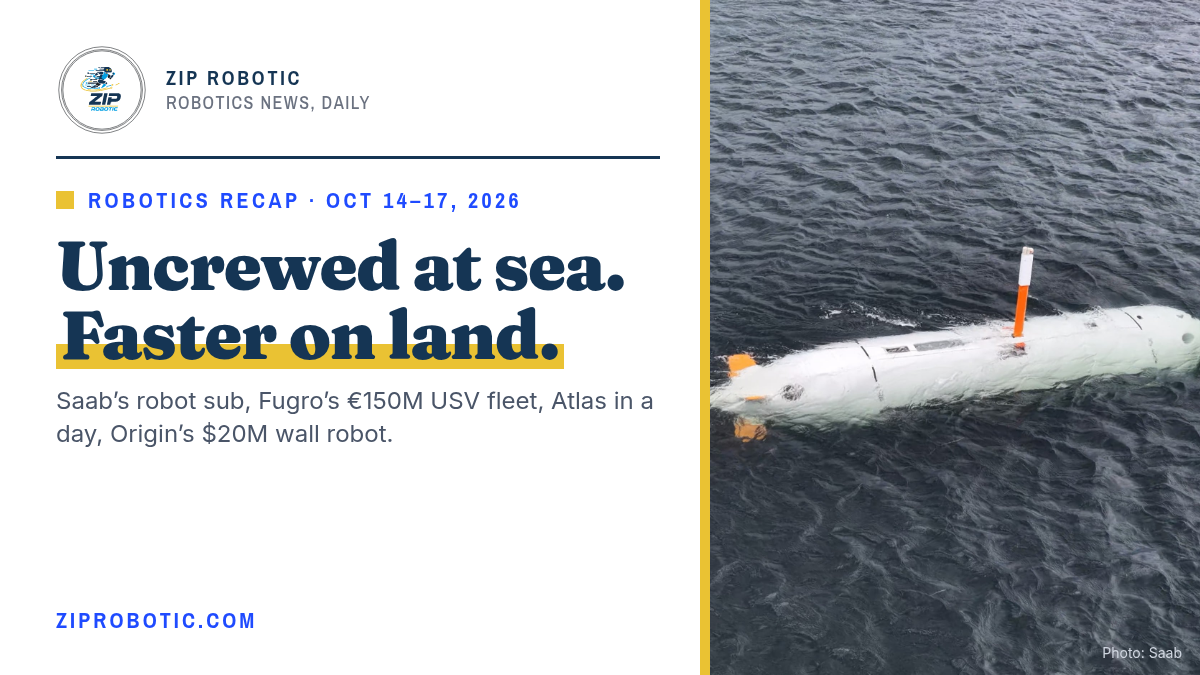
    Four stories from October 14–17, one theme: uncrewed at sea, faster on land. Sweden got a large robot submarine from contract to sea trials in under a year. Fugro lined up €150 million to put up to 25 more remotely operated survey boats on the water. Boston Dynamics put a number on how long it takes to build an Atlas. And a construction startup came out of stealth with a robot that finishes walls on live job sites.

    1. Saab launches a large robot sub in under a year

    Saab, the Swedish Defence Materiel Administration (FMV) and the Swedish Armed Forces have developed, built and launched a demonstrator for a Large Uncrewed Underwater Vehicle (LUUV) less than one year after contract award, Saab said on October 16. Following successful sea trials, the first phase of the project is complete; the next phase is expected to focus on more advanced capabilities.

    Saab credits the pace to its software-centric approach and to Autonomous Ocean Core, its autonomous control system for surface and subsurface vehicles, combined with Swedish submarine design and sensor-integration expertise. The demonstrator is meant to support evaluation of future underwater capabilities and to operate alongside existing naval platforms such as submarines. FMV now leads the project with the Armed Forces and Saab, and the results will feed Swedish decisions on whether and how to buy autonomous underwater systems.

    “The fact that we have also been able to develop and test the system in such a short timeframe demonstrates the strength of the collaboration between the Swedish Armed Forces, FMV and Saab,” said Mats Wicksell, head of Saab’s business area Naval.

    Why it matters: Navies have spent years talking about large uncrewed subs. Contract to sea trials in under twelve months is a software-speed timeline for a hardware program, and it comes the same week the U.S. Navy deployed the Seahawk USV with a carrier strike group.

    Source: Saab press release, Oct 16, 2026

    2. Fugro gets €150 million for up to 25 robot survey boats

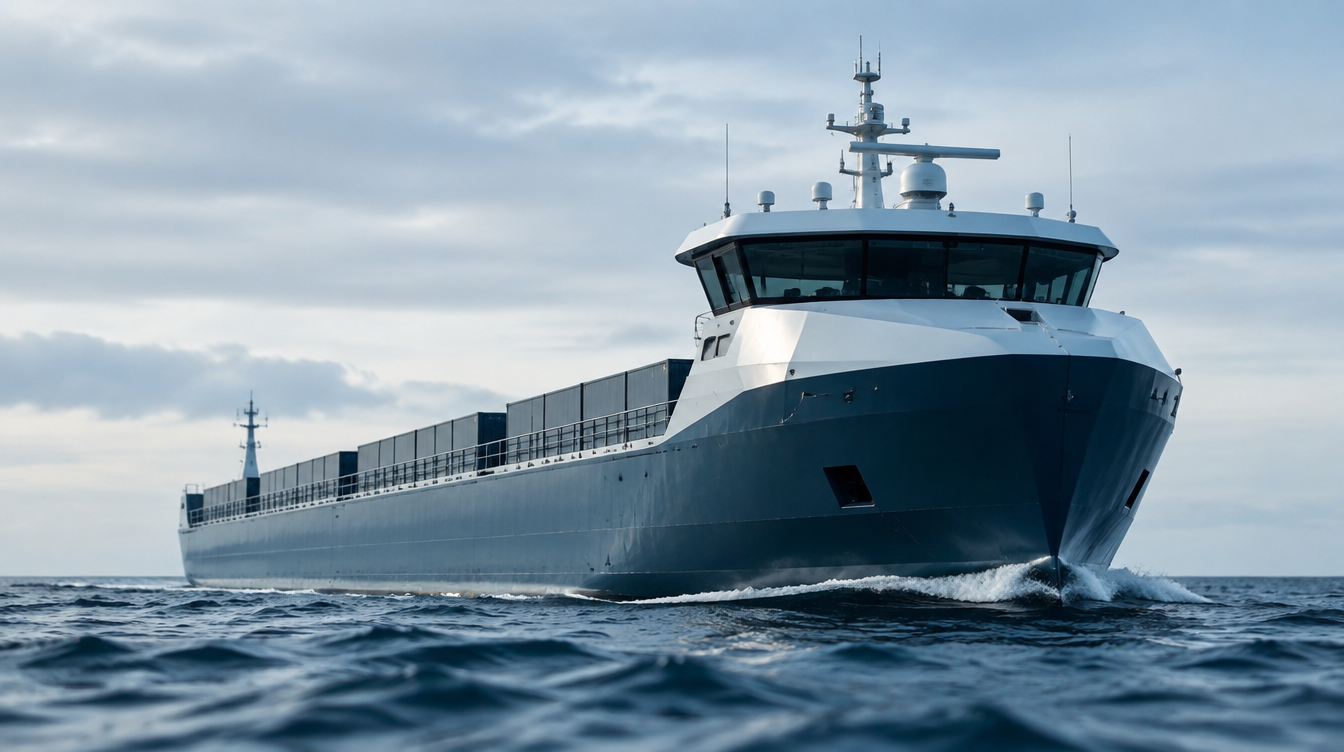
    The European Investment Bank has signed a €150 million unsecured financing facility with Fugro, the Dutch geo-data company that surveys the seabed for offshore wind farms, subsea cables and other marine infrastructure, the two announced on October 14. The money supports the development and deployment of Fugro’s uncrewed surface vessel (USV) technology and the phased expansion of its remote operations.

    According to the EIB, the financing enables the deployment of up to 25 new medium-sized, long-range, remotely operated USVs for seabed surveys, site assessments and offshore asset monitoring, plus research into remote sensing and underwater robotics. Paired with underwater robots, the boats let Fugro send subsea data to remote operating centres in real time. The EIB says Fugro’s USVs cut fuel consumption by up to 90% compared with traditional survey vessels. Eligible costs run from January 2025 through December 2031, with drawings of up to 10 years.

    “Uncrewed surface vessels and remote operations are an important part of our long-term strategy – enhancing safety, reducing carbon emissions and improving operational efficiency,” said Fugro CEO Mark Heine.

    Why it matters: “Up to 25” is a programme ceiling, not a purchase order, but it is a public development bank underwriting a commercial robot fleet. Offshore wind and cable work runs on survey data, and this is a bet that most of it will be collected without a crew aboard. It’s the same direction as Ørsted’s cargo-drone trial at Hornsea 2.

    Sources: Fugro press release, Oct 14, 2026 · EIB press release, Oct 14, 2026

    3. Boston Dynamics says an Atlas now takes about a day to build

    In a roughly six-minute video published October 14, Machine, Assemble, Repair: How We Build Atlas, Boston Dynamics walks through the prototype operations floor where it machines, assembles and repairs its humanoid. Senior Technical Program Manager Katie Conner says building a robot now takes about a day, with an ambition of roughly an hour next year and minutes after that.

    Machinists in the video explain why precision work, including gear cutting, stays in-house: engineers can walk down to the shop, change a design and have revised parts the same day or the next. Staff describe robotic arms built into assembly and a loop that can take an idea from Monday to implementation by the end of the week. Boston Dynamics frames the goal as “manufacturing velocity.”

    Why it matters: The humanoid race is now a manufacturing race. Note what the number measures: the time to build one robot on a prototype floor, not a production line’s output rate, and the hour is a target, not a result. Context: Boston Dynamics named a new CEO earlier this month and is preparing Atlas for Hyundai’s plants.

    Source: Boston Dynamics on YouTube, Oct 14, 2026

    4. Origin raises $20 million for a robot that finishes walls

    San Francisco-based Origin came out of stealth on October 15 with $20 million in total funding co-led by Accel and Zacua Ventures, with angel investors from Anduril, Skild AI, 1X and Tesla. Its flagship robot, OG-1, autonomously handles wall finishing on live job sites: it applies compound, sands and primes, works at heights of up to 14 feet and uses real-time force control to keep even pressure on the wall. It runs on what Origin calls a Construction Action Model, trained in simulation and on deployment data.

    The money goes toward building out the OG-1 fleet and pilots, including with two of the largest drywall finishing contractors in the U.S., with more scheduled in Germany, Sweden, France and Saudi Arabia. Origin is targeting 150 robots deployed by the end of 2027 and says its robots already work at three times human speed. That’s the company’s claim, not an independent measurement.

    Why it matters: Origin says interior work makes up more than 65% of construction timelines and is still done mostly by hand. Mechanization so far has focused on heavy exterior work, so a robot that finishes walls next to working crews is aimed at the bigger share of the labor gap.

    Source: Origin press release, Oct 15, 2026

    The pattern

    Below the surface, on the build floor, on the job site. Two marine fleets got real money or real sea time, and two land robots got judged on throughput: how fast you can build one, and how fast it can do a trade. Which move matters most? Tell us on X @ZipRobotic.

    Roundups every Wednesday and Sunday at ziprobotic.com.

    Sources

    • Saab, “Saab, FMV and the Swedish Armed Forces launch uncrewed underwater vehicle,” Oct 16, 2026 — https://www.saab.com/newsroom/press-releases/2026/saab-fmv-and-the-swedish-armed-forces-launch-uncrewed-underwater-vehicle
    • Fugro, “Fugro secures long-term funding with new facility from the European Investment Bank…,” Oct 14, 2026 — https://www.fugro.com/news/press-releases/2026/fugro-secures-long-term-funding-with-new-facility-from-the-european-investment-bank-and-two-year-extension-of-existing-senior-debt-facilities
    • European Investment Bank, “EIB boosts sustainable development of geo-data experts Fugro,” Oct 14, 2026 — https://www.eib.org/en/press/all/2026-335-eib-boosts-sustainable-development-of-geo-data-experts-fugro
    • Boston Dynamics, “Machine, Assemble, Repair: How We Build Atlas,” YouTube, Oct 14, 2026 — https://www.youtube.com/watch?v=dP_i7hRvGpE
    • Origin, “Origin Emerges From Stealth With $20 Million to Build General-Purpose Robots for Construction,” Oct 15, 2026 — https://origin.tech/blog/origin-emerges-from-stealth-with-20-million

    Images: Saab (LUUV), Fugro (USV), Boston Dynamics (video still), Origin (founders). Used from each company’s own press materials.
  • Seahawk Becomes the First Uncrewed Ship to Deploy With a U.S. Carrier Strike Group

    Seahawk Becomes the First Uncrewed Ship to Deploy With a U.S. Carrier Strike Group

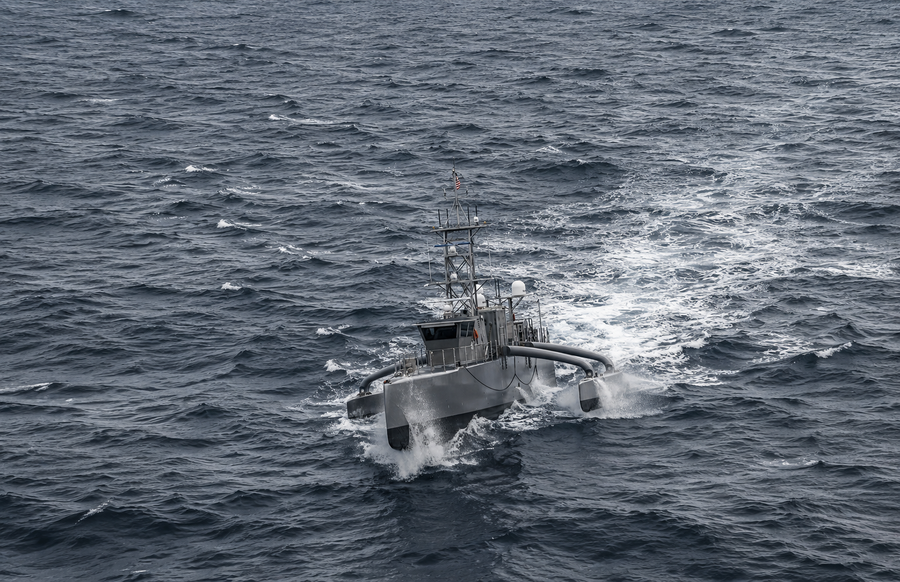
    WASHINGTON — The USS Theodore Roosevelt Carrier Strike Group sailed from San Diego in late September with an uncrewed warship in company, the first time a U.S. carrier strike group has deployed with a large autonomous surface vessel. Acting Navy Secretary Hung Cao disclosed the milestone on 14 October at the Association of the United States Army’s annual meeting in Washington. The vessel is Seahawk, a Leidos-built medium unmanned surface vessel that has contributed to a fleet-wide total of more than 200,000 nautical miles of autonomous operation.

    By the numbers

    Leidos first confirmed the deployment in an 8 September release, which put its cumulative maritime autonomy record at over 200,000 nautical miles and 14,000 hours of safe autonomous operation across more than a decade of development. Seahawk runs the Leidos Autonomous Vessel Architecture (LAVA), a modular stack handling navigation, mission execution and obstacle avoidance.

    What the company says Seahawk has demonstrated is specific: autonomous navigation and perception with limited human intervention; collision avoidance compliant with COLREGs, the international rules of the road at sea; automatic routing around designated keep-out zones; retention of control over an alternate communications path when the primary link drops; and waypoint navigation in a GPS-denied environment, with the vessel reacquiring GPS without leaving its track. It operates inside the strike group’s own communications and command-and-control framework rather than on a separate network.

    The same release described a second Leidos vessel, Sea Hunter, as the only medium USV at RIMPAC 2026, where it ran autonomously for more than 2,000 nautical miles from Pearl Harbor to San Diego. Published program data put Seahawk at roughly 145 long tons fully loaded with 14,000 gallons of fuel, built under a 2017 Office of Naval Research contract of about $35.5 million and delivered to the Navy in 2021 — figures that do not appear in the Leidos release itself.

    The significance is less the hull than the escort slot. A carrier strike group is the Navy’s most tightly choreographed formation; putting an uncrewed ship inside it means the autonomy stack has to satisfy the same station-keeping, deconfliction and communications discipline as a crewed escort, on a real operational deployment rather than in an exercise.

    “This is the first carrier strike group to ever deploy with a large-size unmanned surface vessel.”

    Hung Cao, Acting Secretary of the Navy, 14 October 2026

    Sources

  • Robotics Recap: CSIRO Seagrass USV, Korea Clears Humanoids, Gemini Teaches Apollo and Symbotic Buys cellumation

    Robotics Recap: CSIRO Seagrass USV, Korea Clears Humanoids, Gemini Teaches Apollo and Symbotic Buys cellumation

    By Zip Robotic · October 14, 2026

    Four stories from October 11–13, one theme: robots under murky water, on shipyard floors, learning from video, and buying European sortation. CSIRO and partners are towing a camera vehicle behind an uncrewed boat to map seagrass where divers and clear water fail. South Korea cleared 20 Robros bipedal humanoids for live factory tests beside workers, including a Hyundai shipyard. Google DeepMind’s Gemini 4 Argon watched a human play cornhole, wrote its own sim, and put seven straight shots on Apptronik’s Apollo. And Symbotic bought Bremen’s cellumation for the celluveyor sortation deck. Here is what happened and why it matters.

    CSIRO tows a camera under murky water for seagrass

    CSIRO published a partner release on October 13 on trials of a towed underwater vehicle with CQUniversity’s Coastal Marine Ecosystems Research Centre and the Great Barrier Reef Foundation. The tethered system is built to collect high-definition imagery and environmental data just above the seabed in turbid coastal water, where traditional survey methods struggle.

    CSIRO Principal Research Engineer Dr Torsten Merz describes a robotic pair: an uncrewed surface vessel and a towed underwater vehicle. Images are recorded and processed on board the USV and sent to users by radio link; AI-generated analysis is meant to speed seagrass monitoring and assessment. CMERC Director Professor Emma Jackson said researchers can position the camera just above the seabed and tow it over long distances while collecting georeferenced imagery and data. Field work includes Gladstone deployments. In intertidal areas, the TUV can be paired with aerial drone surveys for ground-truthing without walking long distances across sensitive habitat. A final project report is expected later this year. Scaling SeaGrow funding comes from the Australian Government’s Reef Trust and the Great Barrier Reef Foundation.

    Why it matters: Marine science still loses coverage in brown water. A USV that tows eyes along the seabed is a practical autonomy story—restoration and carbon-storing meadows, not just warships.

    Korea clears 20 Robros humanoids for factory floors next to people

    Seoul Economic Daily reported on October 13 that South Korea’s Ministry of Trade, Industry and Energy granted a regulatory sandbox testing exemption to Robros after the sixth Industrial Convergence Regulatory Sandbox Review Committee meeting of 2026. Twenty AI-equipped bipedal humanoids will work at Nepes, Sungwoo Hitech, HD Hyundai Samho and Delivery Lab, in spaces shared with or adjacent to human workers.

    Task mix: cleaning contaminants from circular semiconductor packaging components at Nepes; positioning auto body parts at Sungwoo Hitech; stacking scaffolding brackets that secure elevated work platforms to a ship’s hull at HD Hyundai Samho; moving refrigerated logistics packaging at Delivery Lab. Safety rules written for fenced, stationary industrial robots did not fit mobile humanoids. The government approved the test on the condition that Employment and Labor risk assessments and risk-reduction measures are carried out; the data is meant to inform new safety standards for wider industrial adoption. Trade Minister Kim Jung-kwan said regulation struggles to keep up with AI and that institutional bottlenecks need to come down fast.

    Why it matters: This is a live regulatory path for humanoids sharing floors with people—and one of the four sites is a shipyard stacking hull scaffolding. That is manufacturing autonomy with a marine-adjacent footprint.

    Gemini 4 Argon teaches Apollo cornhole from one video

    Google launched Gemini 4 Argon on October 13. In the same post, Google says Argon scores 87% on the Embodied Reasoning (ERQA) benchmark using pure reasoning. To show robotics skill transfer, Google describes an internal test: Argon watched a raw video of a human playing cornhole, mapped the environment’s spatial coordinates, calculated the whole-body joint movements required, autonomously built the simulation code, and transferred the behavior to Apptronik’s Apollo humanoid. In a real-world trial, Apollo sank seven consecutive shots. Google calls the pipeline “Video-to-Sim-to-Real” and says it can compress weeks of manual simulation modeling into a few hours. A companion Google Developers Blog post the same day walks through Argon workflows across robot control, Real2Sim, physical understanding and self-improvement.

    Why it matters: If ordinary video becomes a training ground because the model writes the sim itself, the long tail of robot skills stops needing a hand-built world for every new task.

    Symbotic buys cellumation and the celluveyor

    Symbotic Inc. announced on October 13 that it has acquired cellumation GmbH of Bremen, Germany, creator of the celluveyor—a patented, software-driven sortation platform. The celluveyor is made of hundreds of independently controlled omnidirectional cells; each cell can move an item in any direction, so the surface decides where products should go while moving them. Symbotic says the tech can deliver more throughput and handle a wider product mix in a fraction of the space traditional conveyors need, and that it is a key enabler for denser inbound and outbound robotic cells.

    cellumation will keep its name and Bremen headquarters, serving its existing global customers while Symbotic accelerates European expansion. Co-founders Dr.-Ing. Hendrik Thamer (CEO) and Dr.-Ing. Claudio Uriarte (CTO) remain with the company. Symbotic Chairman and CEO Rick Cohen tied the deal to prior acquisitions of ARMS Innovations and Fox Robotics and said celluveyor will be sold both as a standalone product and integrated into Symbotic systems. Financial terms were not disclosed.

    Why it matters: A major U.S. warehouse robotics public company is buying European omnidirectional sortation hardware—and keeping the Bremen team as a product company, not just an IP tuck-in.

    The takeaway

    Strip the press language and the stretch says this: under turbid water, a USV+TUV stack is trying to see seagrass at scale; on Korean factory and shipyard floors, regulators just opened a shared-space humanoid trial; in the lab, a frontier model wrote its own sim from a backyard game video and put shots on a humanoid; in the warehouse, Symbotic paid for a denser sortation deck out of Bremen. Watch for CSIRO’s year-end TUV performance report, how Korea’s sandbox data rewrites robot safety rules, whether Video-to-Sim-to-Real shows up outside demo sports, and how fast celluveyor lands inside Symbotic cells versus staying a standalone European product.

    Sources

  • Ørsted Flies 65-Kilogram Toolkits to North Sea Turbines in Four-Week Cargo Drone Trial

    Ørsted Flies 65-Kilogram Toolkits to North Sea Turbines in Four-Week Cargo Drone Trial

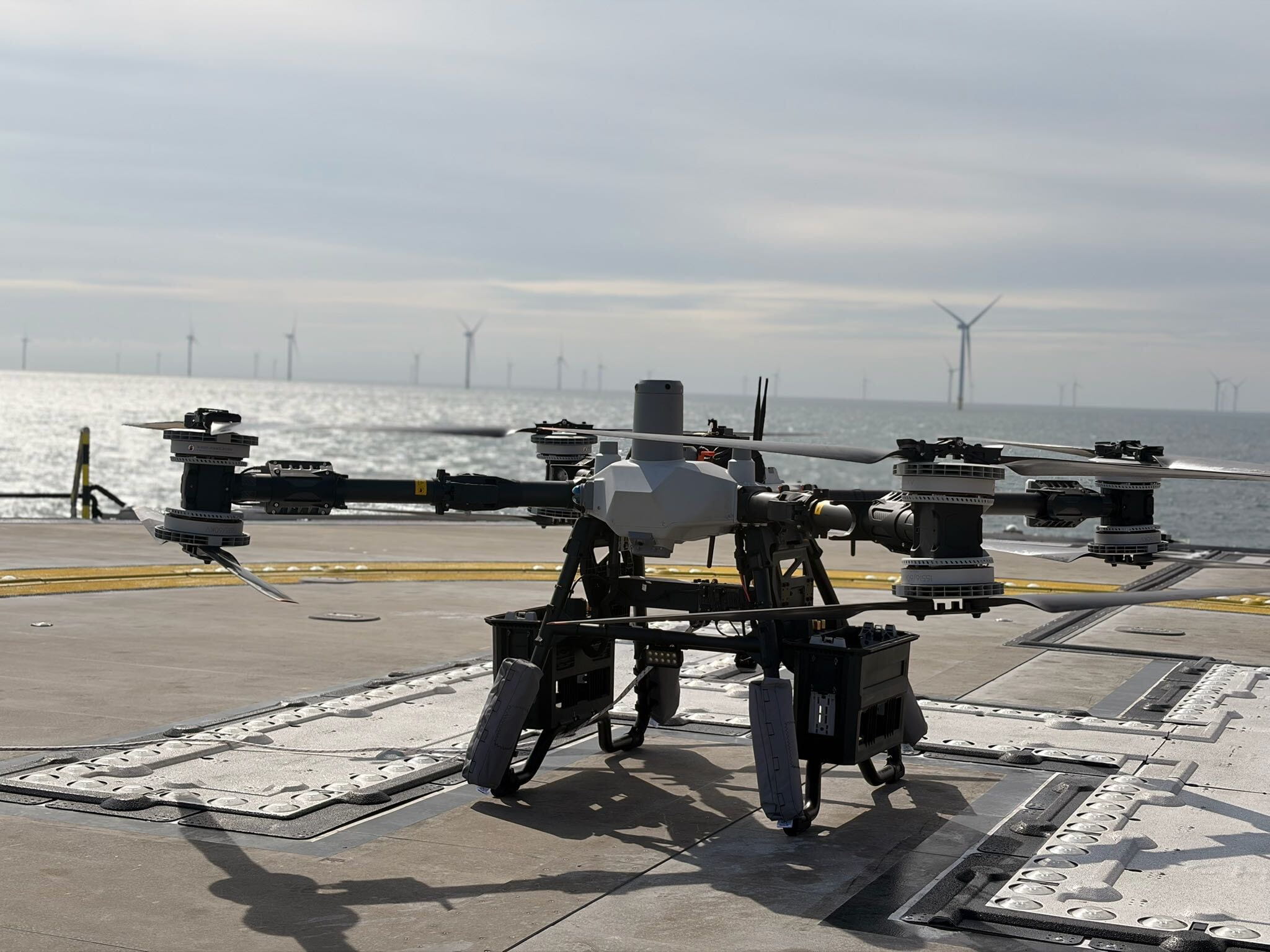
    LONDON — Ørsted has completed a four-week trial at its Hornsea 2 offshore wind farm in which cargo drones operated by Skyports Drone Services flew maintenance kits weighing 55 to 65 kg out to turbines in the North Sea. The developer announced the result on 7 October. During the trial the team also flew its first beyond-visual-line-of-sight delivery inside the wind farm, covering roughly 4 km, planned and monitored from a service operations vessel at sea rather than from shore.

    Why it matters

    The economics of offshore wind maintenance are dominated by boats. Getting a bag of tools and spare parts to a turbine normally means a crew-transfer vessel trip, a crane lift and a weather window. Ørsted’s framing is that a drone with a 65 kg payload collapses that chain for a large share of routine jobs: kits were delivered to turbines ahead of technicians arriving, and collected again afterwards and returned to the vessel.

    The operational detail that matters most is the automatic hook. Skyports fitted a load-collection mechanism that picks up and releases the bag without a person attaching it by hand, which is what turns a demonstration flight into something that can run repeatedly during a working day. Ørsted says the daily presence of the aircraft let it absorb ad-hoc requests as well as scheduled work — the difference between a scripted trial and a service.

    “As we had a daily presence, we were able to cater for a variety of ad-hoc flight requests. We were able to cover both planned and reactive works.”

    Richard McCrilley, project lead, Ørsted

    The UK Civil Aviation Authority supported the airspace approvals, and its head of technical strategy for future safety and innovation, Ed Clay, said continued industry collaboration and evidence gathering would be vital — regulator language for a capability that is not yet routinely permissioned. Ørsted operates 11 GW of installed offshore wind capacity with a further 7.2 GW under construction, so a per-turbine saving scales.

    What the release does not contain is a number for any of the savings. Ørsted says fewer vessel trips should cut fuel use, emissions and operating cost and improve turbine uptime, but publishes no figures for flights completed, vessel trips displaced, fuel saved or cost per delivery, and does not name the aircraft type flown. There is no announced move from trial to contracted service.

    Sources

  • Saab UK and Kraken Fit a Giraffe 1X Radar to an 8.4-Metre Robot Boat in Under Seven Months

    Saab UK and Kraken Fit a Giraffe 1X Radar to an 8.4-Metre Robot Boat in Under Seven Months

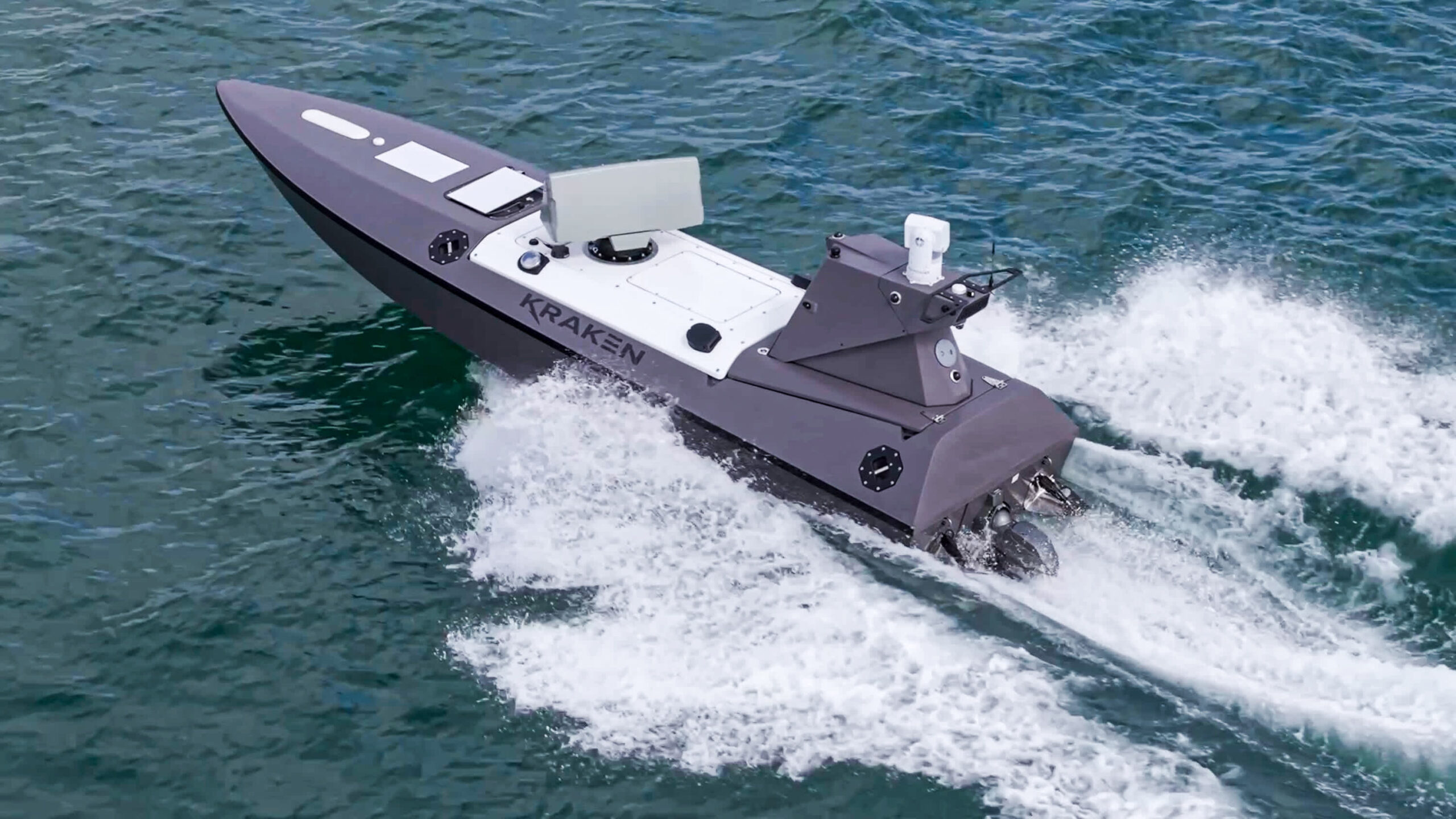
    FAREHAM, England — Saab UK and Kraken Technology Group have installed a Giraffe 1X 3D radar in the modular payload bay of Kraken’s K3 Scout uncrewed surface vessel, producing an experimental “drone seeker” boat the two companies say went from concept to working prototype in less than seven months. The pair announced the prototype on 5 October, after a series of sea trials to check radar performance in a maritime environment. Both the radar and the hull are built in Fareham, on England’s south coast.

    By the numbers

    Kraken lists the K3 Scout at 8.4 metres length overall, a 55-knot maximum speed, 600 kg of payload capacity and 650 nautical miles of range at 25 knots, with endurance of up to 30 days depending on mission. Saab rates the complete Giraffe 1X system at under 150 kg, of which 100 kg is topside. That weight budget is the engineering reason the pairing works: a full 3D radar fits inside a quarter of the boat’s payload margin.

    What the radar contributes is small-target detection. Saab markets the 1X as able to pick up a UAV “lighter than a milk carton” at 4 km while refreshing its entire search volume every second. Bolted to a low-signature hull that can loiter off a port, an offshore wind farm or a tanker anchorage with nobody aboard, that turns a fixed air-defence mast into a movable early-warning picket — the capability gap that drone attacks on shipping in the Red Sea and on Baltic infrastructure have made expensive to ignore.

    “Exactly what the K3 SCOUT was designed to do: integrate with mission-relevant payloads.”

    Mal Crease, CEO and founder, Kraken Technology Group

    The commercial context is a company scaling fast. Kraken raised $175 million at a $1 billion valuation in July 2026, began K3 Scout series production at Rheinmetall’s Hamburg site in April, and says it is building toward an output of 1,000 vessels a year. Saab UK, for its part, took a UK Ministry of Defence Giraffe 1X order worth roughly £24 million in April 2026 and delivered its 100th unit of the radar in May.

    Both companies are explicit that the vessel remains experimental. No customer, order, delivery schedule or contract value was announced, and neither release gives a detection range for the radar as fitted to the boat, or results from the sea trials beyond the fact that they happened.

    Sources

  • Navy Puts 180-Foot Saronic Marauder Into Production After 140 Test Scenarios

    Navy Puts 180-Foot Saronic Marauder Into Production After 140 Test Scenarios

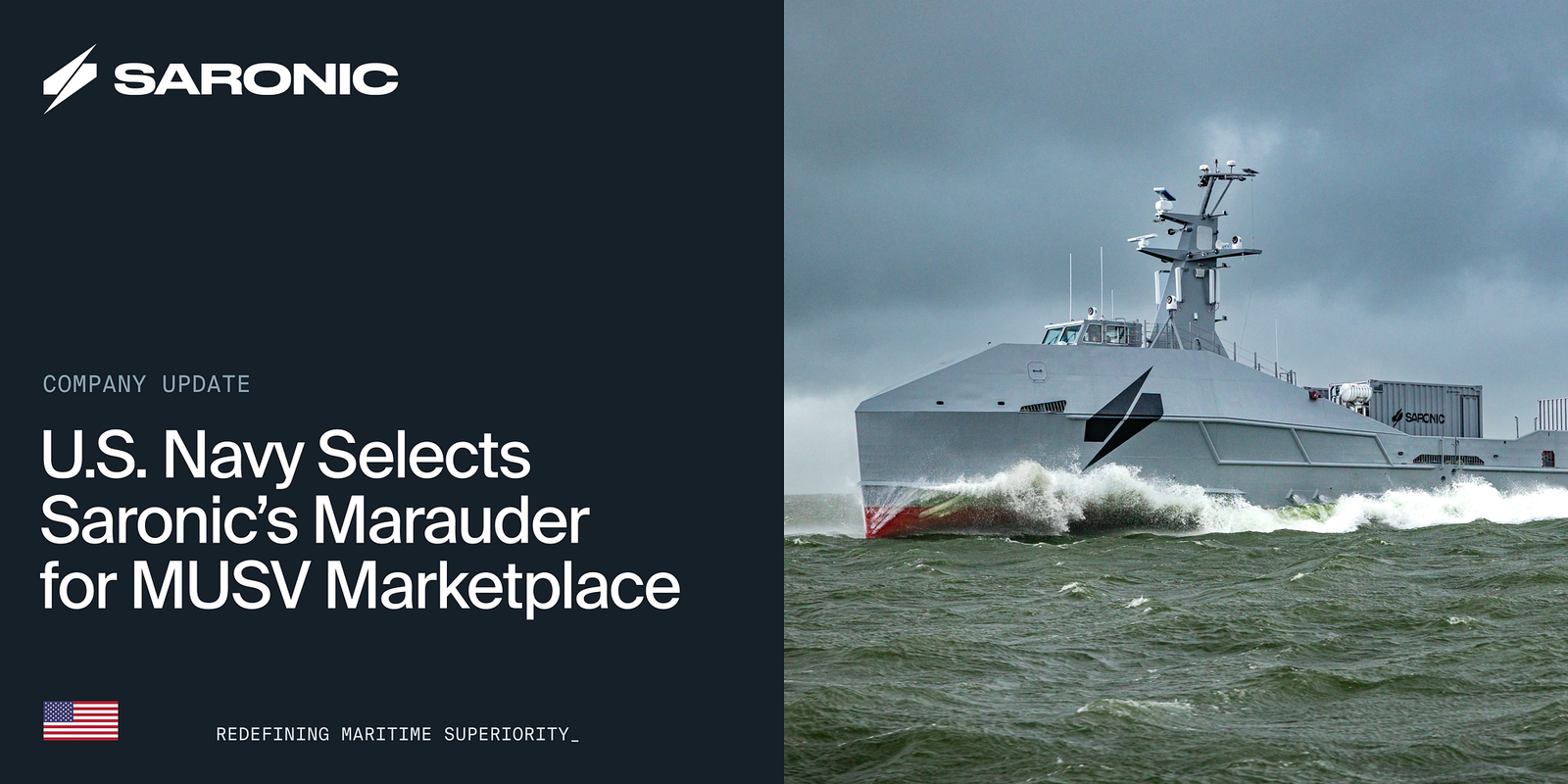
    AUSTIN, Texas — The U.S. Navy has awarded Saronic Technologies a firm-fixed-price production Other Transaction award for Marauder, its 180-foot autonomous surface vessel, under the service’s Medium Unmanned Surface Vessel (MUSV) Marketplace. Saronic announced the award on 30 September, following an at-sea evaluation in which Marauder ran eight consecutive days of 24/7 operations and completed more than 140 test scenarios without a failure. Neither Saronic nor the Navy disclosed the contract value.

    Why it matters

    The MUSV Marketplace is the Navy’s attempt to buy medium uncrewed vessels from designs that already exist rather than fund a multi-year development program. The award is executed under 10 U.S.C. § 4022(f), the other-transaction authority that lets the service go straight from a successful prototype evaluation to production without a new competition. Saronic was one of seven companies downselected to at-sea testing in June 2026.

    The vessel Saronic put through those trials is a logistics-scale hull, not a strike boat. Published figures give it a 12-knot cruise and a 25-knot-plus sprint, with 5,400 nautical miles of range at a 25-tonne base load and 4,100 nm carrying its 150-tonne maximum — four 40-foot ISO containers, eight 20-foot, or modular payloads in the same space.

    The detail worth noting from the evaluation is how Marauder found other ships. Saronic says the testing emphasised passive perception: detecting, classifying and tracking vessels on onboard passive sensors alone, with no active radar emissions. For a hull designed to operate for weeks without a crew, not broadcasting its own position is a capability, not a limitation — and it is the part of the test that is hardest to fake with a demonstration run.

    “Marauder went from initial design to on-the-water in under a year, and this evaluation demonstrated that the platform holds up under the Navy’s own toughest testing.”

    Dino Mavrookas, CEO and co-founder, Saronic Technologies

    Marauder is the large end of a range that starts with the 24-foot Corsair, already under a separate Navy production contract. Saronic is also building Landing Craft Utility hulls for the Navy at Port Alpha, the shipyard it is standing up in Brownsville, Texas, and in September selected the Port of Gulfport, Mississippi, as its on-water test site for Marauder.

    Sources

  • The Four Degrees of Autonomy That Decide Whether a Robot Ship Can Sail

    The Four Degrees of Autonomy That Decide Whether a Robot Ship Can Sail

    ANALYSIS — The hardest problem in marine autonomy is not the boat. Builders have been putting capable uncrewed surface vessels in the water for a decade; hulls, power systems and perception stacks are engineering problems with engineering answers. The binding constraint is legal. Who is the master of a ship with nobody on it? What will a flag state certify? And how many human beings does a statute say must be aboard regardless of what the software can do?

    In May 2026 the International Maritime Organization answered the first two questions. It has not answered the third, and that gap is where the next five years of marine robotics will actually be decided.

    The IMO adopted the MASS Code — Maritime Autonomous Surface Ships — at the 111th session of its Maritime Safety Committee, held 13–22 May 2026 in London. It took effect on 1 July 2026 as a non-mandatory instrument, opening what the organisation calls an experience-building phase. Work on the mandatory version begins at MSC 112 in December 2026, adoption is targeted for 1 July 2030, and the SOLAS amendments that make it binding are scheduled to enter into force on 1 January 2032. Nearly a decade of multilateral negotiation produced that calendar.

    What the code actually regulates

    The framework sorts vessels into four degrees of autonomy. Degree one is a conventionally crewed ship with automated decision support. Degree two is remote operation with crew still aboard. Degree three is remote control with no crew aboard at all. Degree four is a ship operating without human direction. The first two degrees describe a large slice of the existing commercial fleet and require little new law. Only degrees three and four remove people from the hull, and only those two force the regulatory questions that took ten years to negotiate.

    Scope is narrower than the headlines suggest. The code applies to cargo ships as defined under SOLAS Chapter I. Passenger vessels were deliberately deferred until the experience-building phase produces evidence. Anyone forecasting autonomous ferries on the strength of this document is reading ahead of the text.

    The remote master is the load-bearing idea

    The single most consequential design choice in the code is that it refuses to abolish the master. A designated master remains responsible for the ship at all times, whether standing on the bridge or sitting in a Remote Operations Centre ashore — and that master must have a genuine ability to intervene, not a nominal title on a certificate. Remote Operations Centres themselves must be certified by the vessel’s flag administration.

    That converts an autonomy problem into an organisational one. A company selling degree-three capability is no longer selling a vessel; it is selling a certified shore facility, a staffing model, a communications link with defined failure behaviour, and a named human who carries liability for a hull thousands of miles away. Operators who have modelled the economics purely as crew cost removed tend to discover the ROC on the other side of the ledger.

    “Autonomous vessels must meet the same safety, security and environmental standards as conventional ships.”

    International Maritime Organization, on the adoption of the MASS Code

    Goal-based, not prescriptive

    The code sets safety outcomes rather than dictating mechanisms. That is the right call for a field where the technology will turn over several times before 2032, but it pushes the burden onto class societies and flag administrations to decide what evidence is sufficient. Expect the real rulebook to be written in certification practice over the next four years, not in the code’s own text.

    The American bottleneck is a headcount statute

    The United States is not waiting on the IMO so much as on Congress. A 2026 Government Accountability Office review, GAO-26-108762, found that the Coast Guard currently oversees autonomous vessel design and operation using existing laws and regulations, and that various statutes establish minimum crew numbers per vessel which the agency has no broad authority to waive. GAO reports that the only mechanism allowing such waivers today sits inside an at-sea rocket recovery pilot programme. The review also flagged a shortage of domestic demonstration examples and the difficulty of harmonising US rules with the international framework. Canada, Norway and the United Kingdom have each taken different routes, ranging from compliance guidance to purpose-built regulation.

    Operational work continues in parallel. The Coast Guard’s Research and Development Center in New London, Connecticut opened a cooperative research and development agreement with Saronic Technologies, published in the Federal Register on 18 November 2025, to evaluate uncrewed surface vessels for extended offshore safety and security missions — platform reliability, commanding multiple USVs from a single interface, collision avoidance consistent with international navigation rules, and connectivity.

    Three things are worth watching between now and MSC 112 in December: whether any flag administration issues a Remote Operations Centre certification with published criteria, whether the experience-building phase produces genuine degree-three commercial voyages rather than escorted demonstrations, and whether US manning statutes are touched at all. 2032 is far enough out to feel abstract. It is also close enough that a vessel ordered today will be delivered into it.

    Sources

  • FAA Doubles BEYOND Drone Program as BVLOS Rule Stalls

    FAA Doubles BEYOND Drone Program as BVLOS Rule Stalls

    WASHINGTON — The FAA has announced Phase 2 of its BEYOND program, adding up to eight new lead participants to test larger cargo drones, longer routes and flights above 400 feet. The expansion doubles the program from 8 to as many as 16 participants.

    What Phase 1 produced

    Launched in October 2020, Phase 1 logged 70,563 flights, 48,383 of them beyond visual line of sight (BVLOS). That data was supposed to feed directly into Part 108, the long-awaited rule that would let commercial operators fly BVLOS routinely without a waiver.

    The rule that isn’t

    Part 108 remains unfinished. The FAA missed its June 2026 deadline, leaving delivery, inspection and agricultural drone operators dependent on visual observers or one-off waivers. Administrator Bryan Bedford said Phase 2 “will expand the partnerships and operations needed to address remaining challenges” — which the industry read as: more testing, no date.

    For marine and waterfront operators — dock inspections, marina surveys, coastal monitoring — routine BVLOS is the single regulatory change that would turn drones from a hobbyist tool into infrastructure. We’re still waiting.

    Sources