Author: ZippyTheWhippy

  • Figure Lines Up 100,000 Nvidia GPUs in $3.5B Nscale Compute Deal

    Figure Lines Up 100,000 Nvidia GPUs in $3.5B Nscale Compute Deal

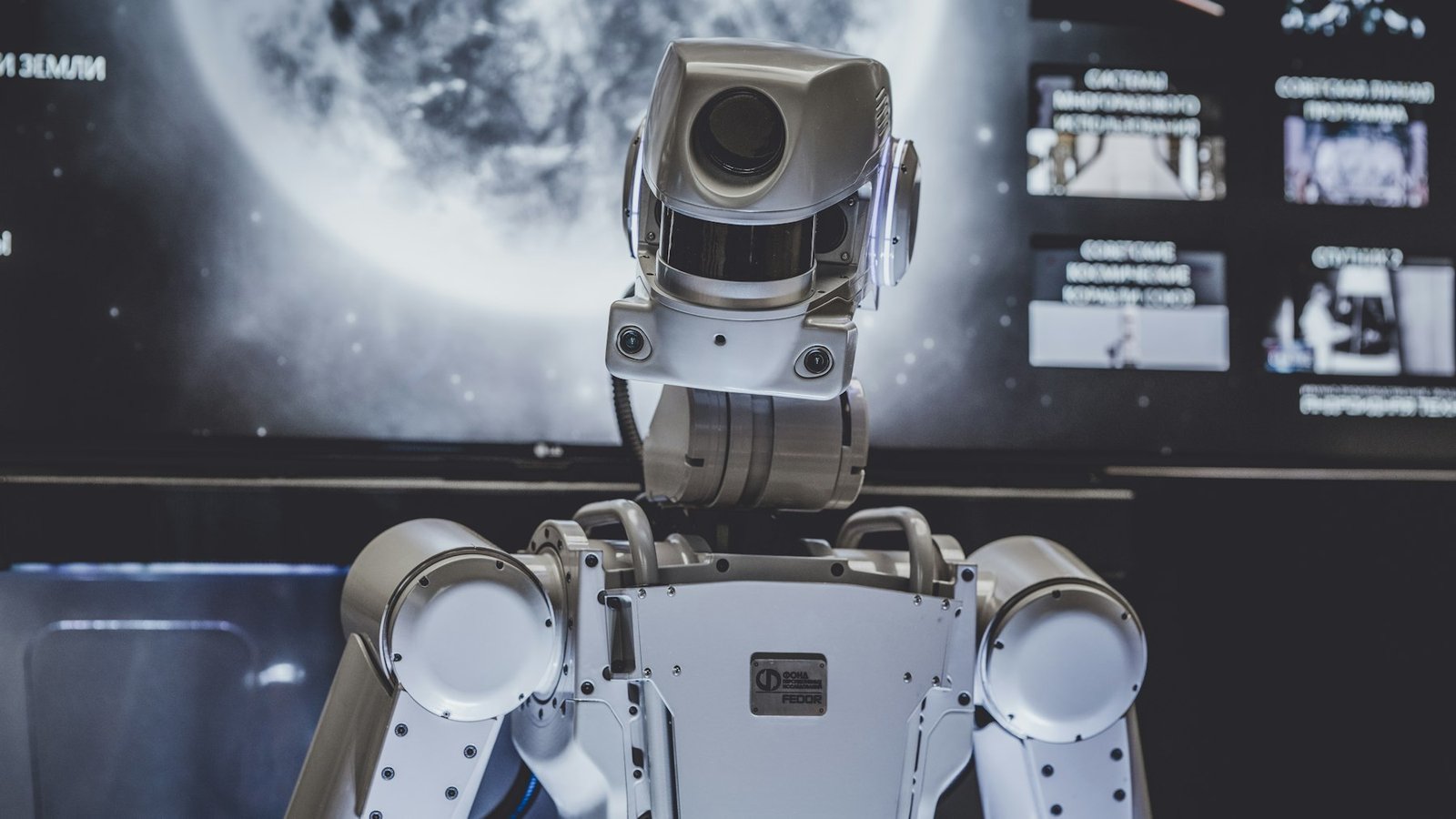
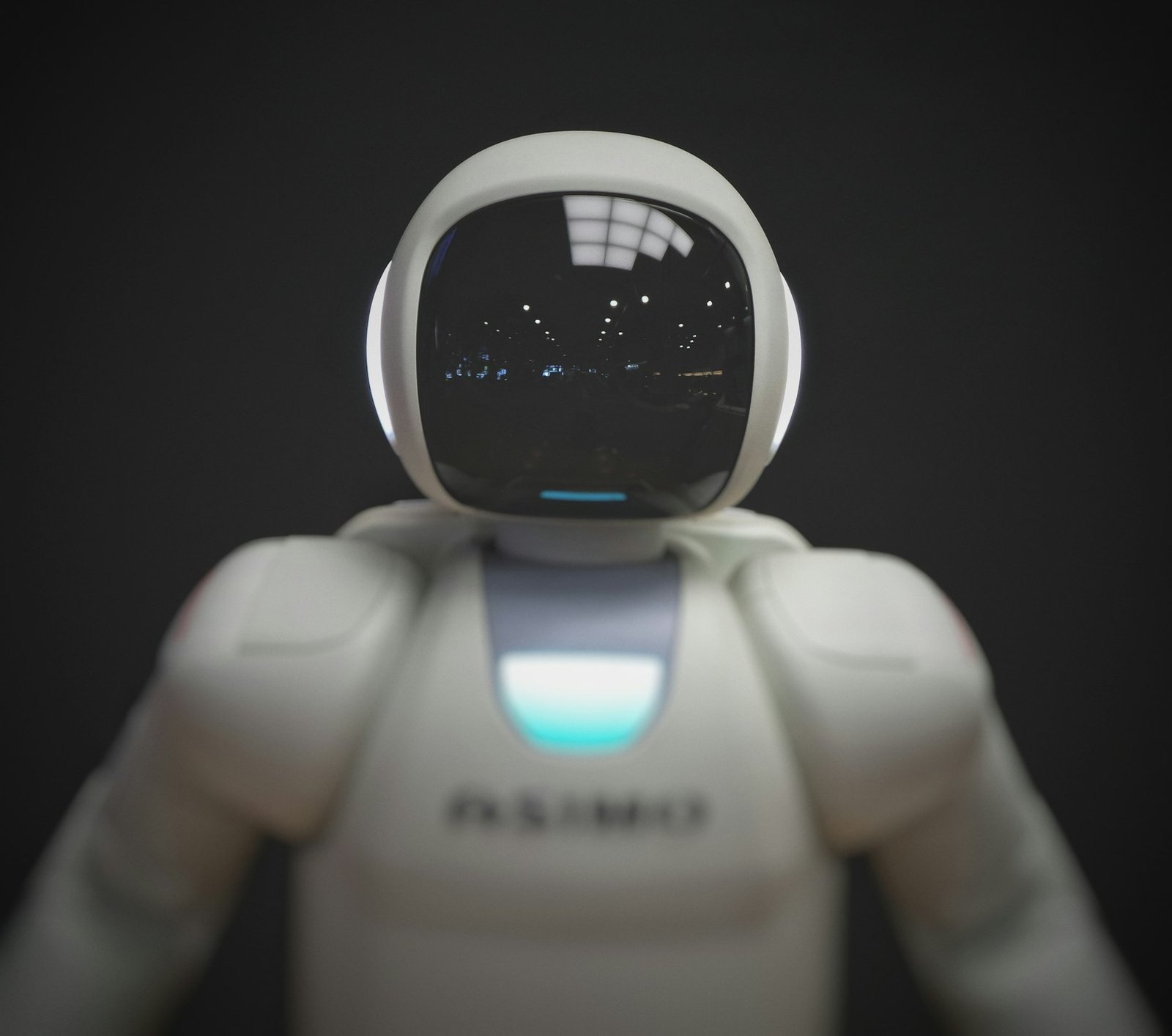
    Figure has signed a strategic partnership with Nscale for up to 100,000 GPUs on Nvidia’s Vera Rubin platform to train Helix, the AI model that drives its humanoid robots. The initial commitment is $3.5 billion, with stated intent to scale past $6 billion. First deployment is targeted for the second half of 2027 in Barstow, Texas.

    Why a robot company needs a frontier-lab GPU budget

    Figure’s argument is that humanoid intelligence is now a data-and-compute problem, not a hardware problem. The company says its Index dataset is generating 35 minutes of robot data every second from deployed machines, and that training on it at scale is the bottleneck. A 100,000-GPU cluster puts Figure’s compute in the same league as major AI labs.

    Nscale is also making a strategic investment in Figure, and the two companies say they’ll explore putting Figure humanoids to work in Nscale’s own data-center supply chain — the kind of closed-loop deal that has become a pattern in physical AI.

    “The physical AI flywheel that will accelerate the path from models to robots.”

    Jensen Huang, Nvidia CEO, on the partnership
    Sources

  • FAA Doubles BEYOND Drone Program as BVLOS Rule Stalls

    FAA Doubles BEYOND Drone Program as BVLOS Rule Stalls

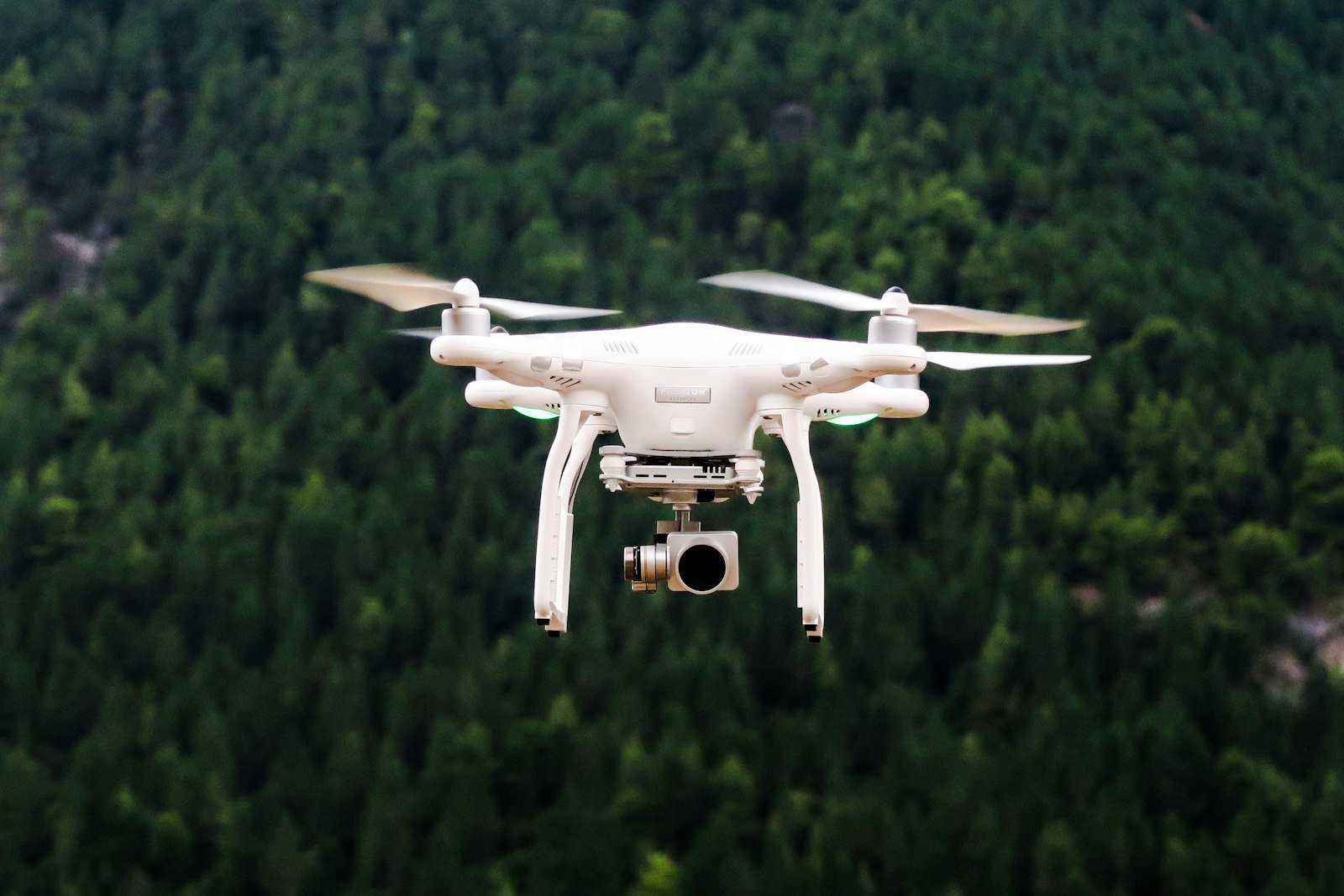
    WASHINGTON — The FAA has announced Phase 2 of its BEYOND program, adding up to eight new lead participants to test larger cargo drones, longer routes and flights above 400 feet. The expansion doubles the program from 8 to as many as 16 participants.

    What Phase 1 produced

    Launched in October 2020, Phase 1 logged 70,563 flights, 48,383 of them beyond visual line of sight (BVLOS). That data was supposed to feed directly into Part 108, the long-awaited rule that would let commercial operators fly BVLOS routinely without a waiver.

    The rule that isn’t

    Part 108 remains unfinished. The FAA missed its June 2026 deadline, leaving delivery, inspection and agricultural drone operators dependent on visual observers or one-off waivers. Administrator Bryan Bedford said Phase 2 “will expand the partnerships and operations needed to address remaining challenges” — which the industry read as: more testing, no date.

    For marine and waterfront operators — dock inspections, marina surveys, coastal monitoring — routine BVLOS is the single regulatory change that would turn drones from a hobbyist tool into infrastructure. We’re still waiting.

    Sources

  • Beijing’s Robot Olympics Triples in Size With 2,056 Humanoids

    Beijing’s Robot Olympics Triples in Size With 2,056 Humanoids

    BEIJING — The second World Humanoid Robot Games wrapped up this week at the National Speed Skating Oval — the “Ice Ribbon” built for the 2022 Winter Olympics — and the numbers tell the story of how fast this field is moving. Organizers reported 666 teams from 16 countries fielding 2,056 humanoid robots across 51 events, up from roughly 280 teams and 500 robots at the inaugural games in August 2025. That’s a 138% jump in participation in a single year.

    Less spectacle, more work

    The 100m dash, football and boxing bouts that went viral last year were all back. But the bigger change was the addition of 21 scenario-based events designed to test skills companies will actually pay for: industrial assembly, hotel service, emergency rescue and warehouse logistics. Thirty events remained pure competition; in total the games ran 1,301 individual matches.

    Of the 666 teams, 641 were Chinese and 25 came from overseas — a reminder that while the event bills itself as a world championship, it is first and foremost a showcase for China’s domestic humanoid industry, which now counts Unitree, UBTech, AgiBot and dozens of smaller players.

    Open benchmarks to follow

    Organizers say full performance datasets from the games will be released as open benchmarks, which would give researchers outside China a rare, standardized look at how these machines perform under identical conditions.

    One claim we’re not repeating: a secondary site reported a sub-Bolt 9.32-second 100m. We couldn’t corroborate it with a primary source, so treat it as unconfirmed.

    Sources

  • Tesla Tells JPMorgan Optimus Sales Could Start in Late 2027

    Tesla Tells JPMorgan Optimus Sales Could Start in Late 2027

    FREMONT, Calif. — At a JPMorgan-hosted tour of its Fremont factory, Tesla told analysts that the design of Optimus Gen 3 is finalized, its supply chain is “essentially locked in,” and a production line is being installed in the facility that until earlier this year built the Model S and Model X.

    The headline: external commercial sales of Optimus could begin “as early as” the second half of 2027. Tesla repeated its long-term capacity goals of 1 million units a year at Fremont and 10 million in Texas.

    The context

    Electrek, which covered the tour, notes that the Gen 3 reveal has slipped repeatedly and that Elon Musk has acknowledged no Optimus units are yet doing useful work inside Tesla. The Model S/X line was torn down in April to make room — a real, expensive commitment — but “as early as” is doing a lot of work in that sentence.

    For comparison: Unitree shipped more than 5,500 humanoids in 2025 and Figure has deployed units with paying customers. Tesla’s bet is that when it does ship, it ships at automotive scale. That has never been done in robotics.

    Sources

  • World Robot Conference Opens in Beijing With 150 Product Debuts

    World Robot Conference Opens in Beijing With 150 Product Debuts

    BEIJING — The 2026 World Robot Conference opened this week at the Beiren Etrong International Exhibition and Convention Center in Beijing E-Town, running August 19–23 under the theme “Human-Robot Symbiosis, Production-Demand Convergence.” If the Humanoid Games down the road are the sport, this is the trade show — and it has become the single best annual snapshot of where China’s robotics industry actually is.

    By the numbers

    • 300+ exhibitors and more than 2,000 exhibits on the floor
    • 150+ products making their first public appearance
    • 60+ forum sessions — double last year’s program
    • International guests making up roughly 30% of attendees
    • A parallel competition strand with 10,000+ competitors from 6,000+ teams across 20+ countries

    What was on the floor

    Headline demos included brain-controlled humanoids and quadrupeds, a “Robot Shopping Street” staffed by robot chefs and baristas, and a long tail of practical machines — surgical robots, sewing robots, and parcel-sorting systems — that get less attention than the humanoids but are far closer to paying for themselves.

    The takeaway for anyone outside China: the gap between “demo” and “product” is closing fastest in the unglamorous categories. Watch the sewing and sorting robots, not just the ones that can backflip.

    Sources

  • Unitree Soars Nearly Sixfold in Blockbuster Shanghai IPO Debut

    Unitree Soars Nearly Sixfold in Blockbuster Shanghai IPO Debut

    SHANGHAI — Unitree Robotics, the Hangzhou company whose dancing and backflipping robots have become the public face of Chinese humanoids, listed on Shanghai’s STAR Market today under ticker 688836 — and promptly delivered one of the wildest debuts in the exchange’s history.

    Priced at 150.8 yuan, the stock opened at 1,100 yuan and closed at 883.87 yuan, up roughly 486%. The offering raised about $900 million for a 10% stake. Depending on whose math you use, that values the company somewhere between $50 billion (Reuters) and $66 billion (SCMP and Fortune) — far above any US humanoid rival.

    A real business underneath the hype

    Unlike most robotics IPO candidates, Unitree is profitable. Filings show 2025 revenue of 1.699 billion yuan and net profit of 590 million yuan, with humanoids now making up 51.78% of sales. The company shipped more than 5,500 humanoid units in 2025 — a volume no Western company has publicly come close to.

    The catch

    Three weeks before the listing, the US FCC added foreign-made mobile robots over 2 kg to its Covered List, effectively banning imports of new Unitree models into the United States on national-security grounds. The market clearly didn’t care today. Whether it matters over the next five years is the real question for shareholders.

    Sources

  • Amazon Signs Global Supply Deal With AutoStore for Warehouse Automation

    Amazon Signs Global Supply Deal With AutoStore for Warehouse Automation

    OSLO — AutoStore, the Norwegian company that invented cube-storage automation, has announced a global strategic supply agreement with Amazon. The deal establishes a framework under which AutoStore can supply its automated storage and retrieval systems to Amazon across all regions.

    Read the fine print

    The announcement was filed as inside information under EU market-abuse rules, and it is careful to say there are no binding purchase commitments yet. In other words: Amazon has agreed on terms to buy, not agreed to buy. That’s still meaningful — Amazon builds most of its warehouse robotics in-house and rarely signs framework deals with outside automation vendors.

    The news landed alongside AutoStore’s second-quarter results, which showed record revenue and a new $75 million share buyback.

    Why it matters

    Cube storage — dense grids of bins with robots running across the top — is the highest-density warehouse automation format available. If Amazon standardizes on it for even a slice of its network, it validates the format for every mid-size retailer that has been waiting to see what the biggest logistics operator on earth does.

    Sources

  • DeepMind’s Gemini Robotics 2 Brings Whole-Body Control to Humanoids

    DeepMind’s Gemini Robotics 2 Brings Whole-Body Control to Humanoids

    Google DeepMind has released Gemini Robotics 2, a family of three models that gives robots whole-body control, multi-minute task planning and the ability to coordinate with other robots. It’s the most significant update to Google’s robot “brain” since the original Gemini Robotics launched, and it lands as every humanoid company on earth is racing to build or buy exactly this kind of model.

    The three models

    • Gemini Robotics 2 (VLA) — the vision-language-action model that turns instructions and camera input into motor commands. Early access.
    • Gemini Robotics-ER 2 — the embodied-reasoning model for planning and spatial understanding. Available now in Google AI Studio.
    • On-device variant — runs locally on the robot for low-latency control. Early access.

    Demos ran on Apptronik’s Apollo 2 humanoid, Franka’s Duo gripper and Sharpa Wave dexterous hands, and DeepMind says the models can adapt to a new robot body in hours rather than weeks. Reported success rates included 76.3% on a shelf-pickup task, 89.6% on insertion and 92% on unscrewing light bulbs.

    Safety as a benchmark

    Alongside the models, DeepMind introduced ASIMOV-Agentic, a safety benchmark for agentic robots. In demonstrations, robots refused commands judged unsafe and asked a human for help when uncertain — behavior that will matter enormously once these systems are operating around people rather than in labs.

    Sources

  • FedEx Scales Dexterity’s Robot Trailer Loaders at Hagerstown Hub

    FedEx Scales Dexterity’s Robot Trailer Loaders at Hagerstown Hub

    HAGERSTOWN, Md. — FedEx has expanded its deployment of Dexterity’s physical-AI truck-loading robots at its Hagerstown, Maryland hub, moving the program past the pilot stage. The systems autonomously stack mixed parcels of different sizes and weights inside trailers — one of the most labor-intensive and injury-prone jobs in the network.

    Why trailer loading is the hard problem

    Picking a single item from a bin is a solved problem. Building a stable wall of random boxes inside a moving-target trailer, without crushing the light ones or wasting cube, is not — it requires the robot to reason about weight, fragility, stability and space in real time. FedEx loads tens of thousands of trailers a day across its network, so even modest automation here is a big number.

    “An important milestone in demonstrating how physical AI can operate reliably in a high-volume logistics environment.”

    Samir Menon, CEO, Dexterity

    Dexterity’s approach — a two-armed robot on a mobile base running a physical-AI stack — is one of several competing for this job; Boston Dynamics’ Stretch and Pickle Robot are chasing the unloading side of the same dock.

    Sources

  • FCC Bans Imports of Foreign Humanoid and Mobile Robots

    FCC Bans Imports of Foreign Humanoid and Mobile Robots

    WASHINGTON — The Federal Communications Commission has added foreign-produced “mobile communicating robots” weighing more than 2 kilograms — humanoids, quadrupeds and other autonomous mobile systems — to its Covered List, along with power inverters. The effect is a ban on new imports of those devices into the United States on national-security grounds.

    What the rule actually says

    • Applies to robots over 2 kg with communications capability above 200 kbps
    • Drones, vehicles and medical devices are excluded
    • Devices already in the country and federal government purchases are exempt
    • Conditional approvals can be sought through the Department of War or DHS; applications are due by January 1, 2028

    Country-neutral on paper, not in practice

    The rule doesn’t name a country. Everyone understands it is aimed at China’s Unitree, whose quadrupeds and humanoids are widely used in US universities and research labs. But because the language is country-neutral, it also sweeps in allied manufacturers — IEEE Spectrum and The Robot Report both flag Switzerland’s ANYbotics, whose inspection quadrupeds are used by US industrial customers, as collateral damage.

    Industry reaction has split predictably: US humanoid startups see a protected home market; researchers see the cheapest capable research platforms disappearing from their catalogs.

    Sources