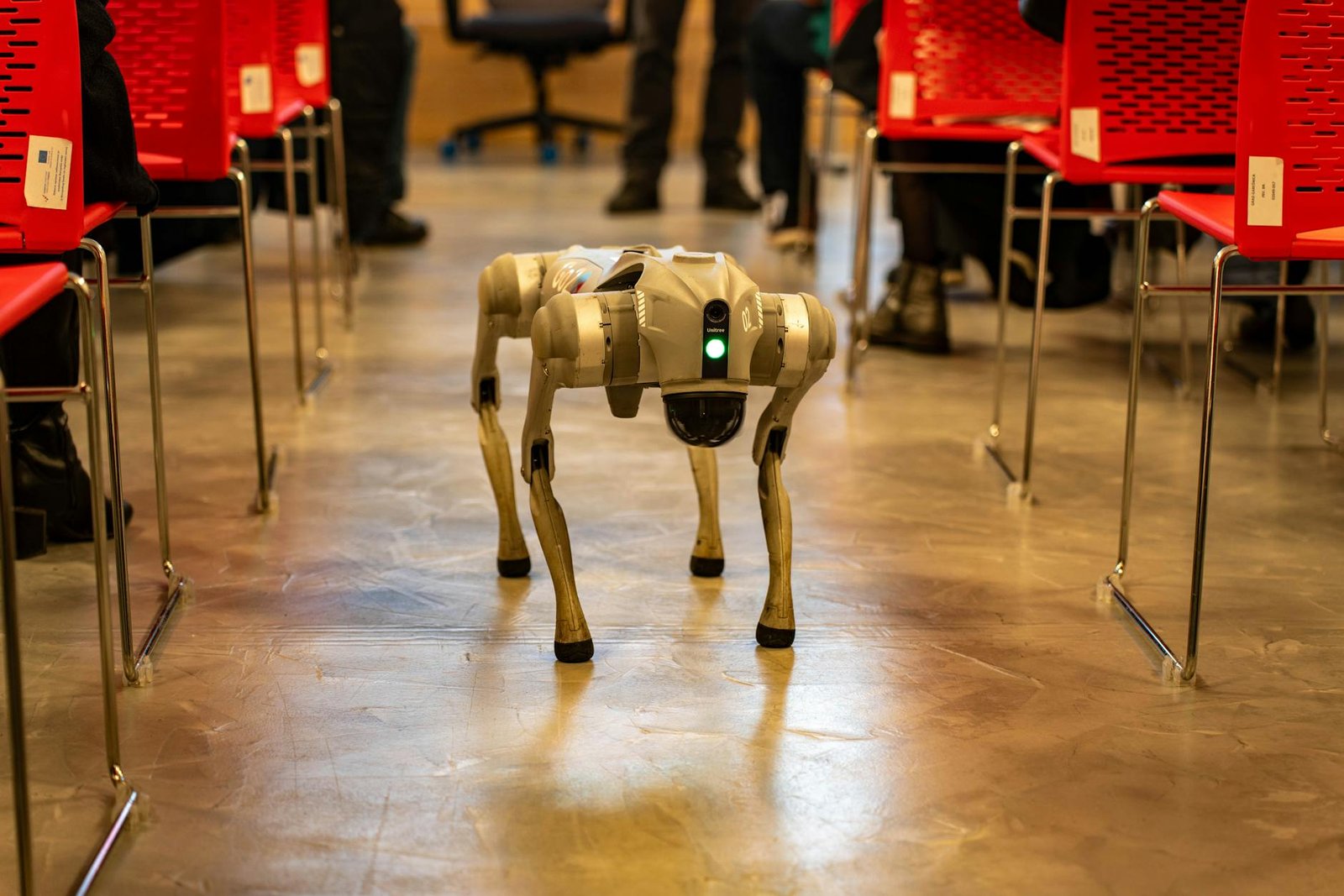
One of the most exciting demos to come out of the robotics and AI community this week doesn’t involve a billion-dollar company. It’s a developer project that quietly shows the future of how humans will interact with physical robots.
The project: combining OpenClaw (the AI agent platform), ROS (Robot Operating System — the standard middleware for robotics), and a new layer called AgenticROS to create what the developer calls “Physical AI.”
What Physical AI Means
Most AI today is disembodied — it exists in software, responds to text, generates outputs that exist in digital space. Physical AI is the bridge between language models and physical actuators: robots that can understand and respond to natural language instructions in the real world.
The demo showed exactly this: someone gave the system a verbal instruction — something like “pick up the red block and place it on the blue platform” — and the robot executed it autonomously, without any manual programming of the specific movements required.
How It Actually Works
- Instruction input — Natural language command received by the OpenClaw agent
- Reasoning layer — OpenClaw processes the instruction, breaks it into actionable subtasks
- AgenticROS translation — Converts OpenClaw’s task plan into ROS commands
- Physical execution — ROS sends commands to the robot’s actuators in real-time
- Feedback loop — Sensor data flows back to OpenClaw, which adapts if needed
Why OpenClaw Is Central to This
OpenClaw, developed and championed locally in South Florida by developer Avi Aisenberg, has been gaining traction as one of the most flexible AI agent frameworks available. Avi has been demonstrating OpenClaw’s capabilities at tech events across Fort Lauderdale and South Florida — most recently at a packed session at General Provisions, where he showed how OpenClaw can be the “brain” behind complex autonomous systems.
The Physical AI demo takes OpenClaw’s existing strengths — multi-step reasoning, tool use, memory, autonomous task completion — and extends them into the physical world through ROS integration. The result is an agent that can think, plan, and then actually do something in physical space.
The Implications
If this approach scales — and there’s good reason to think it can — the way we program and interact with robots changes fundamentally. Instead of writing specific motion sequences or task programs, you describe what you want in plain language and the AI figures out how to do it.
Manufacturing, home robotics, research applications, healthcare — every domain where robots exist would be transformed by the ability to direct them conversationally rather than programmatically.
The demo is early-stage. But early-stage in robotics today moves fast. Watch this space.
Follow ZipRobotic for daily robotics news. Powered by ZIP AI | Built by Avi Aisenberg.